
Corona Resident Lookup: Record Coverage
A useful Corona resident lookup starts with the question being tested. Riverside County Assessor-County Clerk-Recorder, or ACR, property data can identify a parcel, situs and tax-mail contact, but it does not prove who lives there. A recorded deed or lien ties a name to an instrument. Riverside Superior Court can show a public party, case number and chronology. California’s voter tool is an identity-matched self-check, not an open resident list. Vital copies confirm an event only under the copy and eligibility rules that apply to that record.
| Record | What It Confirms | Where to Search | Access |
|---|---|---|---|
| Assessor or tax parcel | Ownership name, situs, tax-mail contact and parcel identity | Riverside ACR Property Search and GIS | Free informational lookup; not occupancy proof |
| Recorded document | Party role, document type, recording date and number | ACR Official Records Search | Free index; copies and certification charged |
| Voter registration | Identity-matched status, address, party and election details | California My Voter Status or approved voter file | Self-lookup or qualified-purpose access only |
| Superior Court case | Public party name, case number, events and disposition when shown | Riverside Court Public Portal | Free account; name index credits; restrictions apply |
| Vital record | Birth, death, public-marriage or dissolution event link | CDPH Vital Records or Riverside ACR | Authorized, informational or confidential rules vary |
| Business or FBN | Entity affiliation, agent, address and filing status | Secretary of State bizfile or Riverside ACR | Free index; filings or copies may cost more |
| Professional or alcohol license | Licensee, status, address of record or premises | California DCA or ABC search | Free public index; detail varies by board |
| Unclaimed property | Name, reported location and property type lead | California State Controller search | Free lead; a claim needs proof |
Use a street or parcel when the person is tied to a place. Use a former name, spouse, or date range when the clue is historical. For a business connection, compare an entity filing with a county fictitious-business-name record and a local license. A court name result is a lead until the role, case type, chronology, and location fit. The county ACR and Superior Court keep their own records, so an online result should lead to the official custodian when a copy or correction matters.
Build a Two-Identifier Corona Resident Lookup
Name-only searching is risky in a city with older central neighborhoods, newer subdivisions, and a large regional population. Start with a full name plus one independent clue: a street, approximate age, spouse, business, middle initial, or known date. Try the surname-first format used by ACR, then married or former names, omitted initials, and the recorded spelling of an organization. Keep a dated note of each result instead of merging records because names look close.
- Anchor the person to a Corona address clue through the ACR property search or Map My County, recording the APN and situs. Treat a tax mailing address as a contact clue, not a residence finding.
- Search the ACR document index using the name format and a narrow date range. Compare the party role, legal description, document number and chronology with the parcel rather than relying on the name alone.
- Check the Riverside court Index for the name and variants, then use the case number to open the free Register of Actions. Match case category, location, dates and public party role.
- Use a vital index or copy request only to test an event such as a birth, death, marriage or dissolution. Confirm the copy type and eligibility before sending an application.
- Write the conclusion as evidence, not certainty. One parcel can show ownership, one court hit can show a party, and one voter self-check authenticates only the person completing it.
- Two identifiers
- A name plus a separate clue that can distinguish one person from another, such as an address or date.
- APN
- The assessor’s parcel number, a stable property key that helps connect a street address to land records.
- Situs
- The physical property address, which differs from a tax mailing address or a person’s actual occupancy.
For older Corona material, search “South Riverside” as well as Corona. The city incorporated under the Corona name in 1896, while early newspapers and directories may retain the former place name. A flexible search catches the history without turning every similar name into one identity.
Read a Corona Court Hit
Corona matters belong chiefly to the Superior Court of California, County of Riverside. Its Public Portal requires a free account. A person or organization Index search costs $1 for one credit, $3.50 for five, or $5 for ten, while case-number searches and the Register of Actions are free. The portal separates Index, Register of Actions, Calendar, Documents, and Probate Notes. Calendar results cover current or future hearings up to seven days, and probate notes are posted in the evening three business days before a hearing when the filing timing fits the court’s rule.
| Search mode | Index for a person or organization; Register of Actions for a case number; Calendar for near-term hearings. |
|---|---|
| Fields | Case number, first/middle/last name or business name, date range, case category and court location; date of birth may be available for disambiguation where permitted. |
| Coverage | Corona civil cases reach March 1994, small claims November 1994, family almost all April 1992, and probate almost all July 1994 forward. |
| Access result | Public party names, roles, filing date, status, events, hearings and disposition may show; documents can be remote, paid, counter-only, restricted or sealed. |
The search-field inventory matters because a name is only one part of the court trail. Narrow a large result with category, location and dates. Criminal coverage depends on region and case level, and remote criminal access can be narrower than a courthouse terminal. California has no comprehensive statewide trial-court party index, so a Riverside result does not stand in for every California court.
A public docket is an index of case activity, not the whole file. The result can be viewable online while a certified copy remains with the clerk. Older matters may require retrieval. For a copy, use the case number and identify the exact document or date through the Riverside clerk. The RI-MC002 records search and copy route supports mail or drop-box requests with a check or money order and a self-addressed stamped envelope; restricted copies may require party status, photo ID, or a court order. Federal matters use PACER, not the county portal.
Sample docket fields: case number and caption; filing date, category and status; party names and roles; counsel where public; Register-of-Actions events; hearing dates; disposition or judgment when available; and a document status showing remote, purchasable or counter-only access.
- Docket
- The court’s running index of a case, its parties, filings, hearings and other recorded events.
- Index versus image
- An index names or summarizes a record; an image is the scanned or filed document and may require a fee or restricted access.
- Certified copy
- A copy issued or attested by the custodian as an official copy, not just a screen view or printout.
Do not treat a same-name hit as identity proof. Compare a middle initial, city, age or lawfully visible birth detail, related property or business evidence, and chronology. A dismissal, acquittal, sealing action, or other disposition changes what the hit means.
Confirm a Corona Resident with Vital Records
California vital records are event records, not an open current-name directory. An authorized certified copy can establish identity when the requester fits the legal category and submits the required sworn statement. An informational certified copy is marked as not valid for identity purposes and may be available more broadly, unless the record is confidential or sealed. Confidential marriage copies are limited to a spouse or a court order under Family Code section 509.
| Event | Custodian and access | 2026 CDPH fee |
|---|---|---|
| Birth | Riverside ACR or CDPH; authorized categories or informational copy, with adoption and sealed-record limits | $31 |
| Death | Riverside ACR or CDPH; identity-valid copies have category rules, informational copies are generally broader | $26 |
| Public marriage | Riverside ACR for county licenses and CDPH for the state record; access depends on copy type | $19 |
| Confidential marriage | Riverside ACR; spouse access or court order under Family Code section 509 | $19 |
| Dissolution certificate | CDPH supplies a limited certificate; Riverside Superior Court holds the decree and file | $18 |
Riverside ACR’s eVitals route supports county birth, death, and marriage requests. County fees in 2026 are birth $34, death $26, public marriage $19, and confidential marriage $19. Mail requests use a check or money order payable to the named custodian. A failed search can produce a Certificate of No Record, and the search fee is not refunded.
CDPH statewide events begin in July 1905. Earlier research turns to county, church, archive, and genealogy sources. California does not offer a casual public statewide birth-name index. The application asks for the applicant, event details, relationship, purpose, copy type, signature, and often a sworn statement. Follow the current instructions rather than assuming an age-based opening rule.
Confirm a Corona Business Owner
A business trail can help separate two people with the same name, but a filing is not a residence record. California Secretary of State bizfile Online returns entity name and number, formation or registration date, status, jurisdiction, street or mailing address, agent details, statement due date, and filing PDFs where available. The result set defaults to the closest 500 matches. A registered agent is a service contact, not automatically an owner or resident.
The county fictitious-business-name record adds a local filing layer. Corona’s business-license and permit records can connect an entity to a local premises, while CorStat exposes a city license dataset. Compare the legal entity, DBA, address, date and status before treating a business connection as a useful second identifier.
The California Secretary of State bizfile search is the state starting point for entity names and filings.
The search screen helps test a name against the state entity index, but filing data still needs a date and address check before it is linked to a person.
The city’s CorStat business-license dataset displayed 7,239 rows and 12 columns at inspection, including DBA, business address, business type, status, and license status. It reported weekly frequency but showed a June 12, 2024 last-update date, so a current search should treat the visible update as a freshness warning.
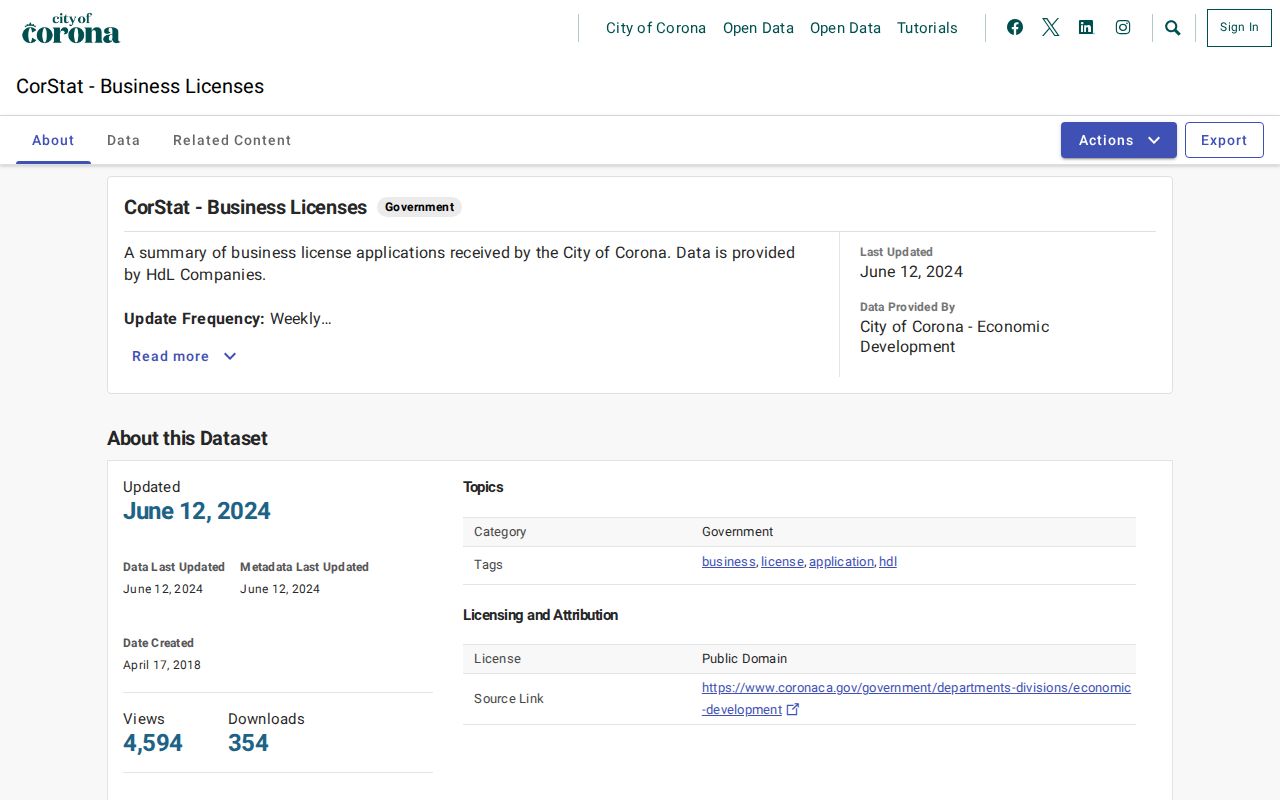
CorStat can show a local license connection and its status. It does not turn a business address into proof that a named person lives at that location.
For a premises clue, the California ABC license lookup supports licensee, premises, address, city, ZIP, county and other report modes. The licensee or business name is a stronger match point than a bare street address.
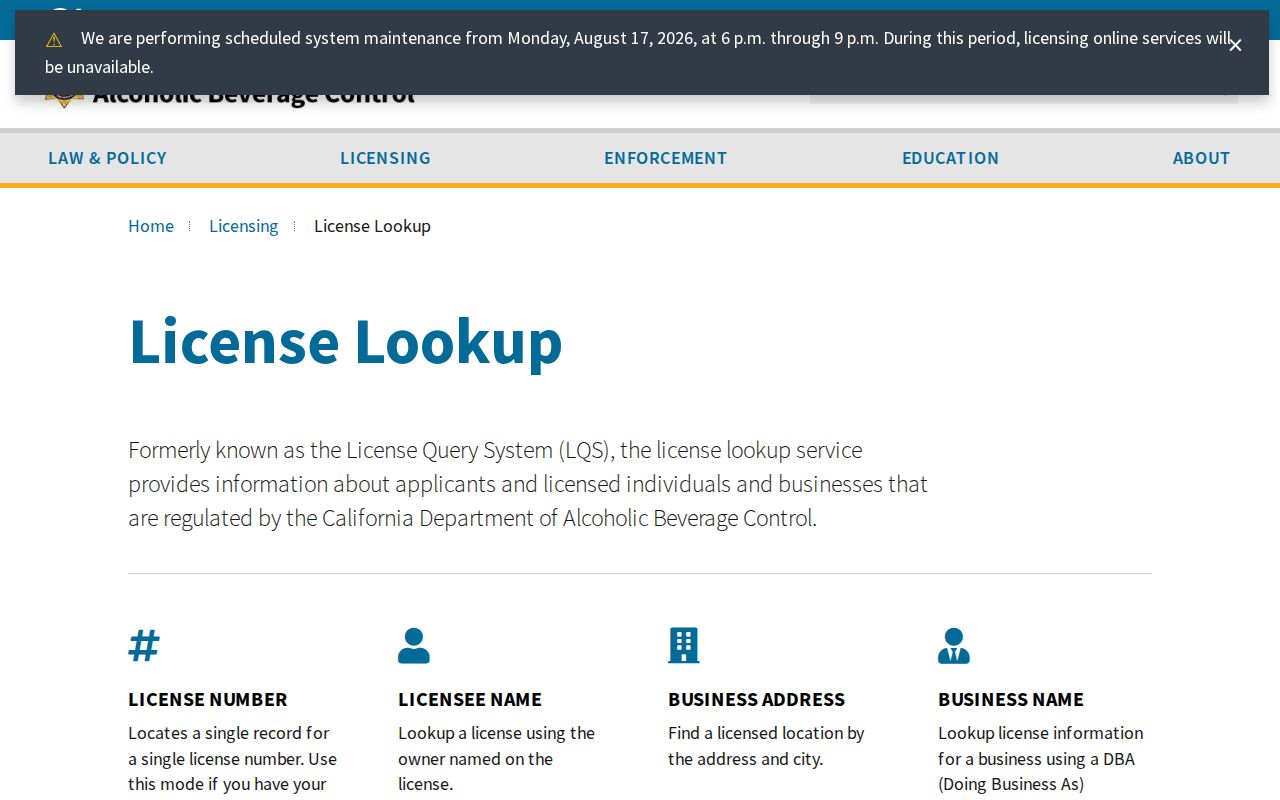
An alcohol license ties a licensee or premises to a regulated record. It is useful corroboration for a business identity, not a personal occupancy finding.
Locate a Corona Resident Heir Through Probate
Probate is a focused human use for a resident lookup. A Riverside court case caption or Register of Actions can point to an estate, guardianship, or conservatorship matter. The useful next step is the petition, notice, or other public filing that explains the relationship, not a guess based on a shared surname. Request the exact case document from the clerk when the portal shows only an index entry.
Pair the probate lead with a deed and the Riverside ACR recorder index. A recorded instrument can show a party role, date, document number, and legal description. An obituary or Sunnyslope Cemetery transcription can add a death date, relationship clue, and burial location. Heritage Room files, local newspapers, and yearbooks may fill a family-history gap, but they do not replace a certified court or vital copy.
When adoption or amended records appear in the trail, use California’s official reunion, contact, or court channels. Adoption records are confidential. Do not attempt to bypass a sealed record by stitching together weak online matches. A careful heir search states what the probate file proves, what the deed proves, and what remains unconfirmed.
Correct a Corona Resident Record
A wrong result belongs first with the custodian that created or indexed it. For parcel identity, contact Riverside ACR assessor staff with the APN and supporting documents. For a recorded instrument, use the recorder’s correction or redaction process and identify the document number. For a court docket, ask the Riverside clerk about the case number and exact field. Voter corrections go to the registrar, while vital amendments go to Riverside ACR or CDPH under their forms.
When the needed item is a city record that is identifiable and already exists, use the Corona City Clerk public-record request portal. A focused request should name the department, date range, address or APN, permit or case number, and desired format. The California Public Records Act, Government Code sections 7920.000 through 7931.000, creates a presumption of access to disclosable records, but it does not require a city to answer a question, create a new list, or release an exempt file.
Use the online index first, then the counter, phone, mail, or request route documented by the custodian. ACR office computers cover roughly 1975 forward, while 1974 and earlier recorder material is held at Gateway Riverside. Mail searches need party names, likely date, document type and parcel number, and a pre-1976 request is limited to two years after the estimated date. Heritage Room staff can search undigitized local material when the official trail stops.
Where a Corona Resident Lookup Ends
California My Voter Status is an authenticated self-lookup. It can return registration status, address, party preference, language preference, polling place, ballot status, and county contact details after an identity match. The form uses first name, last name, full date of birth, and a driver license or ID match or the last four digits of an SSN. A qualified voter-file request is a separate application for election, scholarly, journalistic, political, or governmental purposes. Elections Code sections 2188 and 2194, plus 2 CCR sections 19001 through 19013, limit access. A statewide file costs $100; a specific request costs $30 per voter up to $100 and ten voters, while a county-specific fee applies. Casual curiosity does not open the file.
The Riverside Registrar of Voters is the county contact fallback for voter questions.

Riverside voter services can help identify the proper county channel, but the voter file still excludes protected identifiers and suppresses confidential voters.
Safe at Home can provide a substitute mailing address and confidential voter registration for eligible survivors and other qualifying participants. DMV personal data is controlled by the federal Driver’s Privacy Protection Act. Adoption, juvenile, sealed, and confidential court or vital records can remain outside ordinary public access. Consumer privacy tools can address covered business data, but they do not automatically erase a deed, court filing, or assessment held under a separate records law.
Lawful use. A Corona resident lookup is for personal, lawful research, family history, civic understanding, or a safe reconnection. California law does not make public availability permission to stalk, harass, intimidate, or harm anyone.
Stop when the custodian marks a record protected or when the evidence no longer supports the identity. A reliable lookup leaves a clear source trail, records the date of access, and avoids turning a partial match into a claim about a living person.